

What overnight care can ease
Safer nights at home
Regular night-time help can reduce risk around toileting, mobility and distress.
More rest for relatives
When we stay overnight, family members get more chance to sleep and recover.
Planned around real patterns
We shape the arrangement around sleep habits, likely interruptions and supervision.
Support when nights have become the hardest part
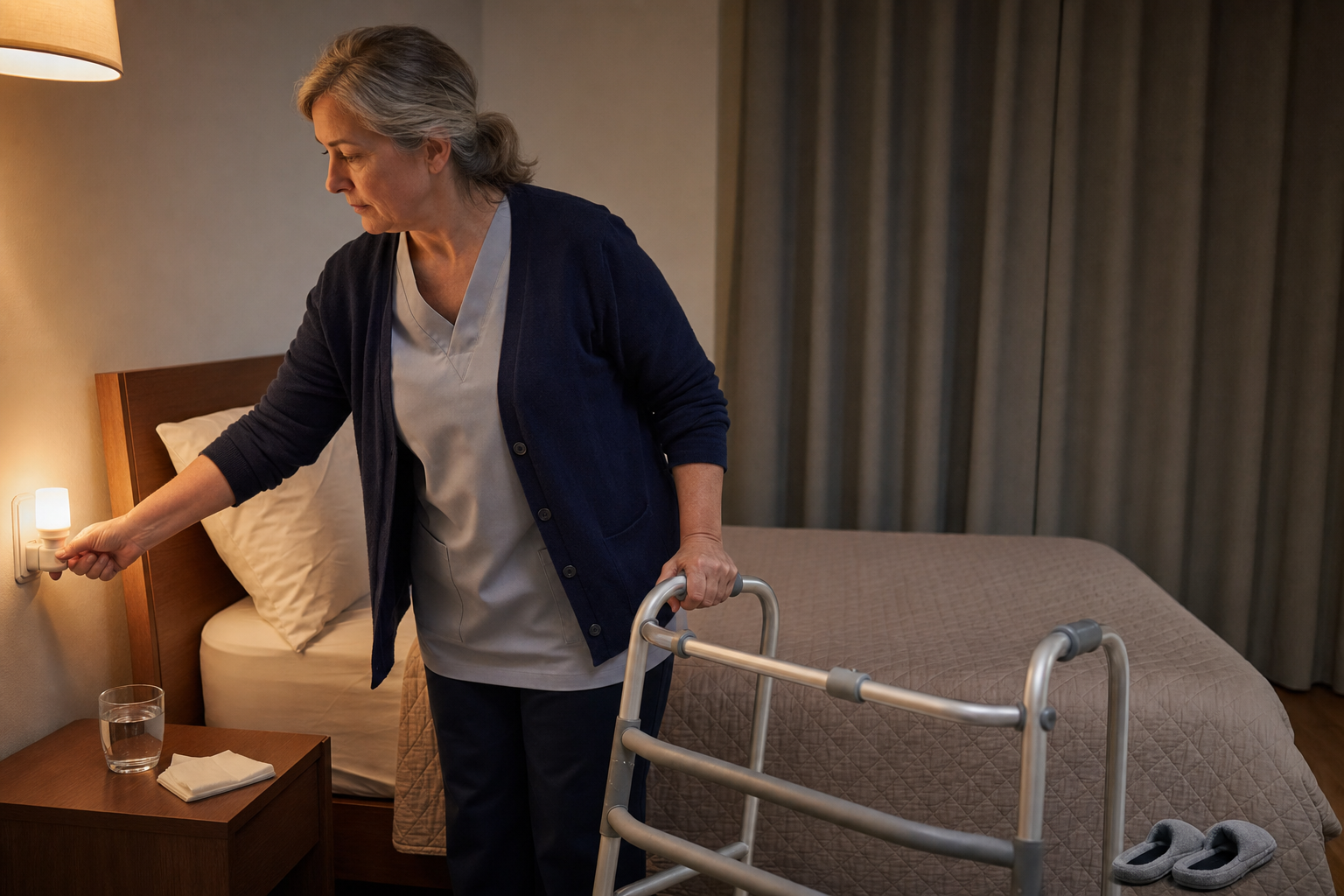
Some households cope reasonably well in the daytime, then struggle once the evening arrives. Our overnight care means one of our carers stays in the home to help with night-time needs such as toileting, repositioning, medication support, mobility assistance, personal care, reassurance and companionship. Families choosing Bornipete Limited often come to this service because sleep is being broken, anxiety rises in the early hours or relatives no longer feel confident leaving someone alone overnight. We plan the arrangement around the person's sleep pattern, the likely frequency of support and the level of supervision that will help the night feel safer and calmer.
Planning the practical side of overnight support
Night care works better when the practical details are settled before the first stay. We discuss access, sleeping arrangements, equipment, emergency contacts, handover information and what should happen if the person wakes distressed or needs help moving. Support through Bornipete Limited starts with a free home visit, and from our Carshalton base we can review how often overnight care is needed and whether the arrangement should change over time. That preparation gives everyone a clearer sense of how the night will run and can help relatives rest more fully themselves.
Frequently asked questions
What can overnight care include?
Overnight care can include help with toileting, personal care, repositioning, medication support, mobility assistance, reassurance and companionship during the night. We agree the expected duties in advance, so the person and family know how the arrangement will work and what kind of support our carer will be there to provide.
How do you decide if overnight care is the right option?
We look at why nights are difficult, how often support is needed, whether anxiety or safety risks rise after dark and what level of supervision will help. For some people, a planned overnight stay is enough. For others, increasing daytime help or exploring live-in care may be more suitable. The home visit helps us judge that.
What practical arrangements need to be made first?
We talk through household access, sleeping arrangements, equipment, emergency contacts and any night-time routines that matter to the person. Those practical details help the first night go more smoothly and reduce uncertainty for everyone involved, especially if nights have already become tiring or stressful.